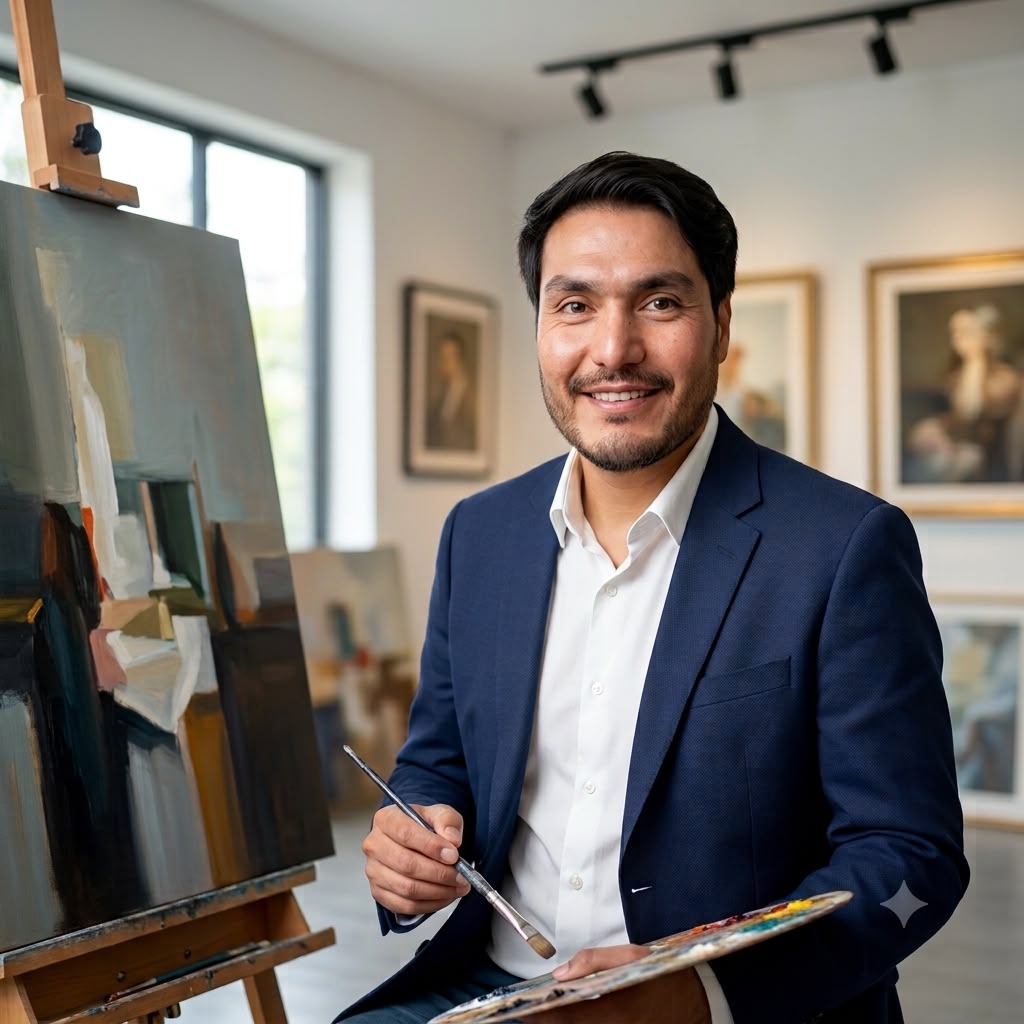
Mohammad Hussain Jamal is a distinguished Afghan painter and professional art restorer with over a decade of experience working at the highest cultural institutions of Afghanistan. His work combines artistic mastery with deep expertise in traditional restoration methods, contributing significantly to the preservation of Afghanistan’s cultural heritage.
Professional Skills:
- After graduating from the Faculty of Fine Arts, Department of Painting at Herat University in 2010, Jamal began his professional career with the German organization ARG‑eV. From 2010 to 2013, he served as a trainer and painter in the rehabilitation project of Kotte Baghcha inside the Presidential Palace, where he trained craftsmen in traditional restoration techniques.
- Official Artist of the Presidential Palace
- In 2013, Jamal was appointed as an official artist of the Presidential Palace, a position he held until the fall of Kabul in August 2021. During this period, he supervised and trained numerous craftsmen and craftswomen in the complex traditional methods required for restoring historical monuments—work that became essential after decades of conflict and widespread damage to cultural sites.
- Teaching and Cultural Engagement
- Between 2014 and 2015, Jamal taught Fine Arts at the Kar-Amooz Art Institute, contributing to the development of emerging Afghan artists. He also worked for nearly ten years within the Artistic and Cultural Departments of the Presidential Palace, actively participating in major cultural programs and national events where President Mohammad Ashraf Ghani delivered speeches.
Notable Achievements:
- Official Artist of the Presidential Palace (2013–2021)
- Led restoration teams for major historical sites after years of conflict
- Trainer for ARG‑eV rehabilitation projects
- Participant in national cultural events such as APEX 2011, AIHRC 2010, and the 2013 Loya Jirga
- Significant contributor to Afghanistan’s cultural reconstruction efforts
Jamal believes that both art and restoration play vital roles in preserving a nation’s cultural identity. He views restoration not only as a technical skill but as a historical responsibility requiring precision, knowledge, and deep respect for heritage. His artistic vision is rooted in the harmony between lived experience, traditional aesthetics, and contemporary techniques.