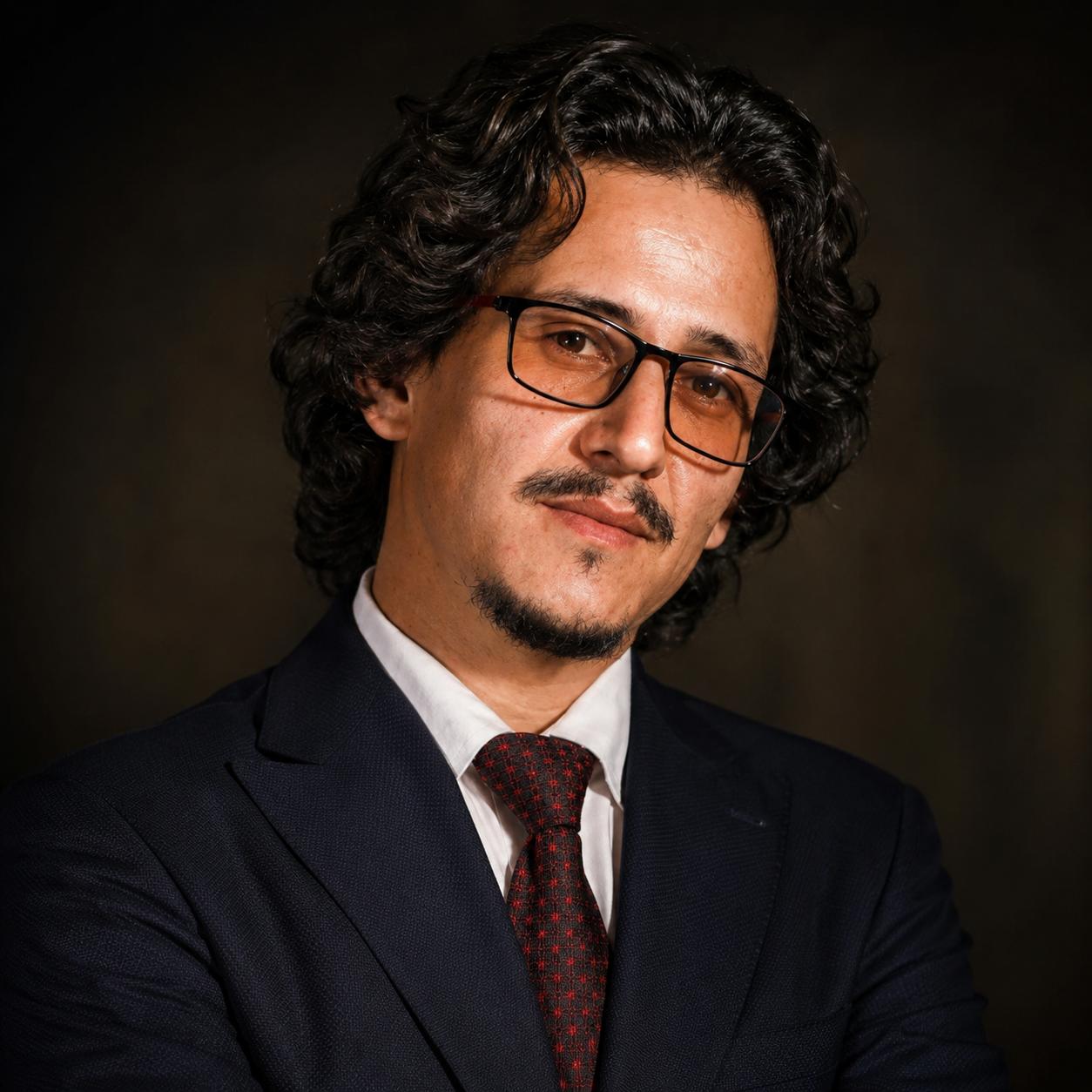
Musa Khan Reja Jamal is an Afghan visual artist and educator whose work explores social realities, cultural identity, human rights, and the lived experiences of marginalized communities—particularly the Hazara people. His practice bridges traditional cultural expression with contemporary and conceptual visual language.


Musa Khan Reja Jamal is an Afghan visual artist, painter, educator, and Hazaragi folk musician with over fifteen years of professional experience in visual arts and cultural practice. His work focuses on social realities, cultural identity, human rights, and the lived experiences of marginalized communities in Afghanistan—especially the Hazara people. Through painting and music, he explores themes of war, displacement, cultural memory, resilience, and resistance. His artistic practice merges traditional cultural expression with contemporary and conceptual visual language.
Musa Khan Reja Jamal is an Afghan painter, educator, and Hazaragi folk musician with over fifteen years of experience in visual arts and cultural practice. His work focuses on themes of war, displacement, cultural memory, resilience, and social justice. Through painting and music, he documents the lived experiences of marginalized communities in Afghanistan and creates a bridge between traditional culture and contemporary visual language.
Born in 1988 in Qarabagh, Ghazni, Reja Jamal grew up in an art-supportive family and developed early interest in drawing, painting, and Hazaragi music. He earned a BA in Painting from Herat University (2012) and an MA in Visual & Performing Arts from Kabul University (2020).
He taught drawing and painting at several institutions, including the Afghan Cultural Institute, Karamoz Higher Education Institute, and the Institute of Fine Arts in Kabul, training hundreds of students—many of them women—before art education for women was restricted.
In 2013, he founded Jamal Art Gallery, a creative space for exhibitions, commissions, and teaching. He was also a member of the Hazaragi folk group Panja, producing music centered on human rights and cultural identity.
His artworks reflect Afghanistan’s social and political realities, addressing themes such as violence, oppression, and survival.
My work combines oil, acrylic, and watercolor within contemporary and conceptual art, influenced by realism and impressionism. I use geometric and abstract forms as symbols of movement, transformation, and tension.
My art is shaped by emotional and spiritual responses to social conditions. I focus on the daily life of Afghan people—especially the Hazara community—their culture, beauty, and suffering. Living amid discrimination and violence makes it impossible to separate art from social responsibility. I believe art can create awareness, empathy, and human connection, and I strive to build a visual language that brings people closer together.
